
Backed by the China-plus-one policy, India's textile and apparel exports have seen a 53 per cent growth during the April-November period of the current fiscal year at around $26 billion. This compares to the figure of $17 billion during the same period in FY21. According to Wazir Textile Index, all major companies including Welspun, Vardhman, Trident, KPR Mills, Indo Count, RSWM, Filatex, Nahar Spg and Indorama have posted higher sales during the first half of the current fiscal year compared to the pre-pandemic year.

With innovations such as the introduction of new variants and the launch of tetra packs, Mohan Meakin (MML) aims to achieve a record high sales of around 10 million units of Old Monk in 2022. From almost 3 million units a few years ago, sales volume has rebounded substantially. "Today, we are over 8 million units and are targeting record sales of 10 million next year," said Vinay Mohan, the director of Mohan Meakin (MML). Mohan said the company had started giving franchisees in states where tetra packs have good sales.
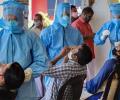
'Kerala is on a par with global standards.'

The cinema industry is staring at a loss of at least Rs 5,000 crore at the box office over the next six months if Omicron proves to be a spoiler.

The spread of the Omicron variant of the coronavirus has made Indian companies persist with their policy of banning overseas trips and allowing only essential travel within India. The IT services firms, which had planned to ask their employees to return to the workplace, are also waiting and watching the Covid-19 situation before fully opening up their offices. Large conglomerates like the Tatas, Birla, JSW and Reliance are continuing with the mandatory social distancing and masking policies within their office premises.
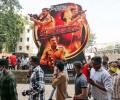
Sooryavanshi and Annaatthe have already collected 6 percent of the film industry's 2020 revenue.

Chennai is one of the cities where works have been completed for almost 62 per cent of the money lined up -- Rs 599 crore of the Rs 959 crore has been utilised so far. Despite this, there was no respite for the people in the city this time either, with North Chennai being the worst affected.

Business executives are finally dusting off their long-unused suitcases to resume travel, thanks to a good vaccination rate, a drop in fresh cases, and an easing of travel restrictions. It comes as a huge relief for the ravaged aviation, travel and hospitality sectors. "We are witnessing a 40 per cent recovery on pre-covid volumes from our business travellers, signalling the return of corporate confidence in air travel," said Indiver Rastogi, president & group head, Global Business Travel, Thomas Cook (India) & SOTC.

A relatively quiet foray by actor Vijay into politics through the TN rural local body elections last month has captured the attention of many, reports Shine Jacob.

Backed by the 'China Plus One' sentiment globally, India's textile exports is expected to grow by 81 per cent to $65 billion by 2026 from the pre-Covid level of around $36 billion in 2019, said a report by the Confederation of Indian Industry (CII) and global consulting firm Kearney. This jump is likely to generate 7.5-10 million new jobs. A large chunk of this targeted increase, or around $16 billion may come from the China Plus One sentiment due to India's relatively large strategic depth compared with Vietnam or Bangladesh, the report said.

Poor dam management was considered as a major reason for the 2018 floods in the state that led to a loss of around Rs 50,000 crore and claimed as many as 483 lives, reports Shine Jacob.

According to the Indian Fireworks' Manufacturers' Association, the ban would wipe out sales of around Rs 600 crore during the upcoming Deepavali season.
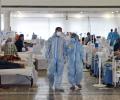
Tamil Nadu plans parallel programme with unique user IDs
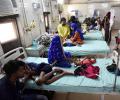
The sudden spike in cases of fever in India has claimed over 100 lives in five states, including UP, MP, Bihar, Haryana, and West Bengal. In UP, Firozabad and Mathura alone have reported 72 cases.

The company said that while the first quarter numbers were at the pre-pandemic levels, it saw a growth of 34 per cent in sales compared to the April to June period of 2020.
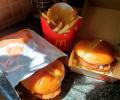
When Amit Jatia, vice-chairman of Westlife Development (WLDL), which operates fast-food chain McDonald's in West and South India, wanted to become the American fast-food giant's local partner in 1995, he had to first convince his family he would remain a staunch vegetarian. As McDonald's - home of the iconic Big Mac - completes 25 years in India, being one of the largest operators in the quick-service restaurant (QSR) segment in the country with over 300 outlets, Jatia has held on to the promise he made to his family. Not one to sit back and watch anyone flip the Big Mac, he gets straight to the meat of the matter when he says McDonald's success menu will see the QSR expand its ever-hungry 'foodprint' by doubling the number of joints and increasing its average unit volume by 35-40 per cent in five years.

Enter the fireworks city of Sivakasi in Tamil Nadu and you can smell a familiar mix of sulphur, potassium nitrate, aluminium and carbon - familiar because if you've ever burst crackers, say on Diwali or Onam, chances are they were made here. Almost every household used to contribute to India's festive joy by contributing almost 90 per cent of the fireworks made in the country. Before the pandemic, around 300,000 people worked in the industry directly and another 500,000 indirectly. Located 540 kilometres from Chennai, Sivakasi is famous for its fireworks and crackers, along with printing and matches, but is almost a ghost town these days.

The Indian Medical Association states that cases are likely to rise further before coming down in Kerala as about 50 per cent of its population is still susceptible to the virus.

From social engineering to bearing the cost of COVID-19 treatment to financial reconstruction of Tamil Nadu's debt the debutant chief minister is emerging as a leader with a difference, says Shjne Jacob

In a first step towards succession plan, Chennai-based fast-moving consumer goods (FMCG) major CavinKare on Monday announced the restructuring of its businesses and also roped in the generation next giving charges of separate business verticals. Announcing the restructuring on Monday, CK Ranganathan, chairman and managing director of CavinKare indicated that the business will be split into mainly four different streams - FMCG, ecommerce, retail and research and development.
